
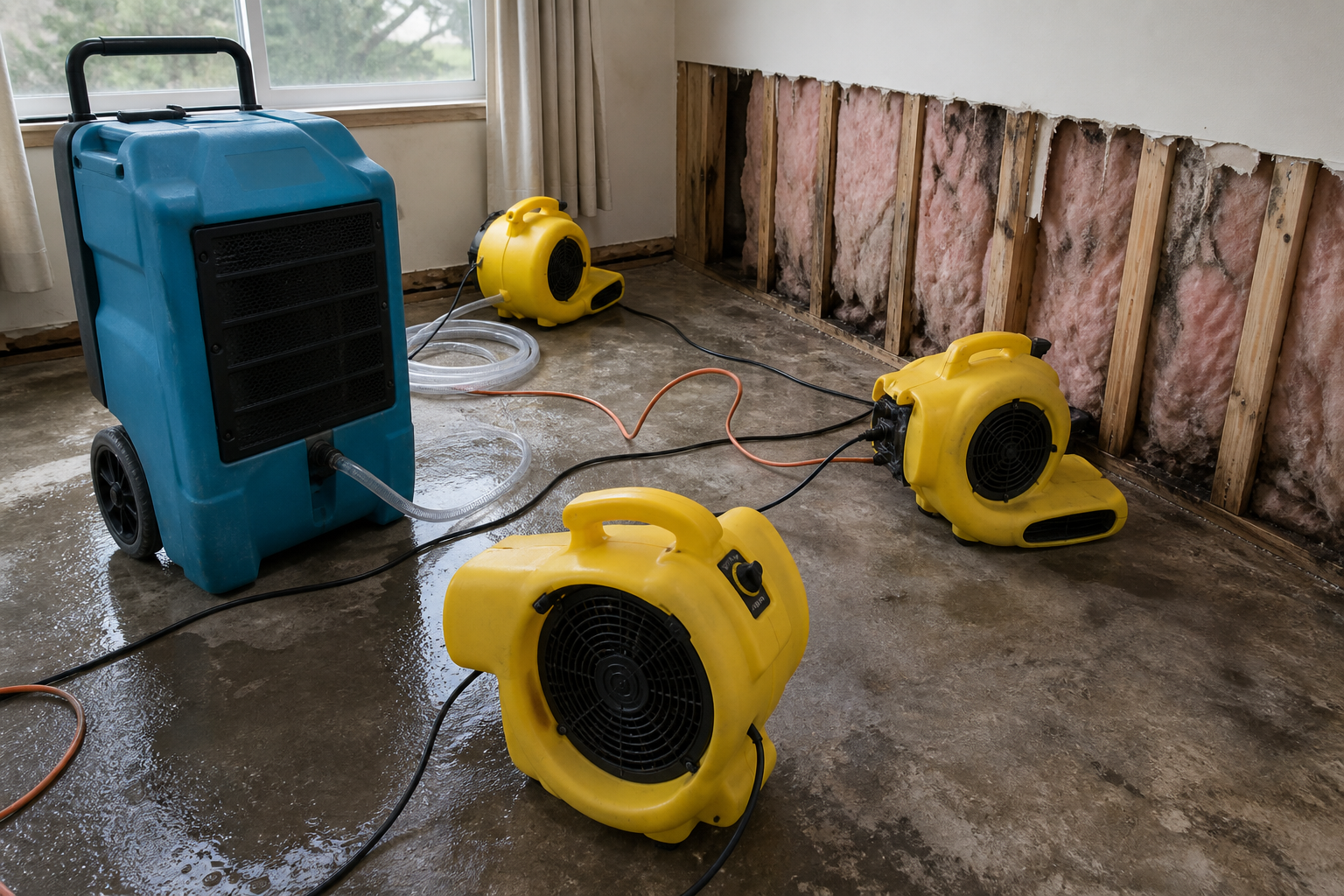
Structural Drying & Dehumidification in Vancouver
Vancouver plaster and fir need more days than board walls, so daily lath pins and grain depression decide when a character house is actually dry.
Kitsilano plaster keeps moisture in the lath long after the paint looks dull. Dunbar, Hastings-Sunrise, and Mount Pleasant character houses do the same with fir floors and dirt crawls. Plaster and fir need more days than a modern board wall. Rush the heat and the fir cups, and the lath stays loaded. We pin the wood, run an LGR, and refuse to judge the job by the colour of the paint. Daily readings keep us honest.
East Vancouver basements are low concrete and a cool bottom plate, a different assembly from the lath upstairs. Marpole garages and slabs get mats and air once the covering is up. Concrete suites downtown and through the West End dry on a slab schedule, with a pinless grid and time. The grain log carries both stories. It's a dry standard from an unaffected bay for the wood. Concrete has to close on a drier area of the same pour and hold overnight.
Kitsilano plaster lath pinned for the daily grain log
Kitsilano plaster looks dull on the face while the lath behind it is still wet. We open the wet area and set air movers on the cavity. Pins go into the wood lath, and an LGR runs so the grains fall as that wood lets go.
Every morning those pin spots and the inlet and outlet grains hit the grain log. Grain depression has to stay wide or the lath reading stalls. The target is a dry lath sample in an unaffected wall of the same house, within a few points, stable overnight. Paint colour never closes the line.
Dunbar fir readings held against the grain log
Dunbar fir cups when the room gets hot and the humidity stays up. Hastings-Sunrise floors do the same. Any heat runs with an LGR beside it. We pin the boards and the subfloor at marked spots, and air movers wash along the grain.
Those pins and the grain depression go on the log each morning. A collapsing surface reading with a high core means we eased off the heat. The goal is a few points from a dry fir board in that house, held overnight. Mount Pleasant fir gets the identical routine when a slow leak has sat in the floor.
East Vancouver basement plates entered on the grain log
East Vancouver basements sit low and cool. The bottom plate lags the rest of the room. Air movers go at the base of the wet wall, the LGR sits where grains actually drop, and overhead joists get a stream in the bay if the water reached them.
Pins in the plate, pins in any wet joist, and a pinless check of the slab share the grain log with inlet and outlet grains. Wood should finish near the pin we took on an upstairs joist in the house and hold overnight. A narrow grain depression means we move the LGR before we blame the building.
Marpole garage slabs charted in the daily grain log
Marpole garages and ground slabs stay cool under vinyl and tile. The covering comes up, mats go down, and air movers cross the face. Concrete suites wet from the unit above take the same path. An LGR cuts the grains in that closed room.
A pinless grid, same squares each day, joins the grain log with the depression number. The slab target is a drier patch of the same pour, and the gap has to hold overnight. Wet plates or sleeper edges get pins, aimed at a dry wood sample a few points away.
Questions about structural drying & dehumidification in Vancouver
Why does Kitsilano lath stay wet after the paint looks dull?
+
What happens to Dunbar fir if the room is heated without an LGR?
+
How do you dry a Marpole garage slab?
+
Other restoration work in Vancouver
Structural Drying & Dehumidification in nearby cities
Get an Assessment
Tell us what happened in Vancouverand we'll get back to you.
On this page
Structural Drying & Dehumidification written for Vancouver houses, including Kitsilano, Mount Pleasant, East Vancouver.
All structural drying & dehumidification details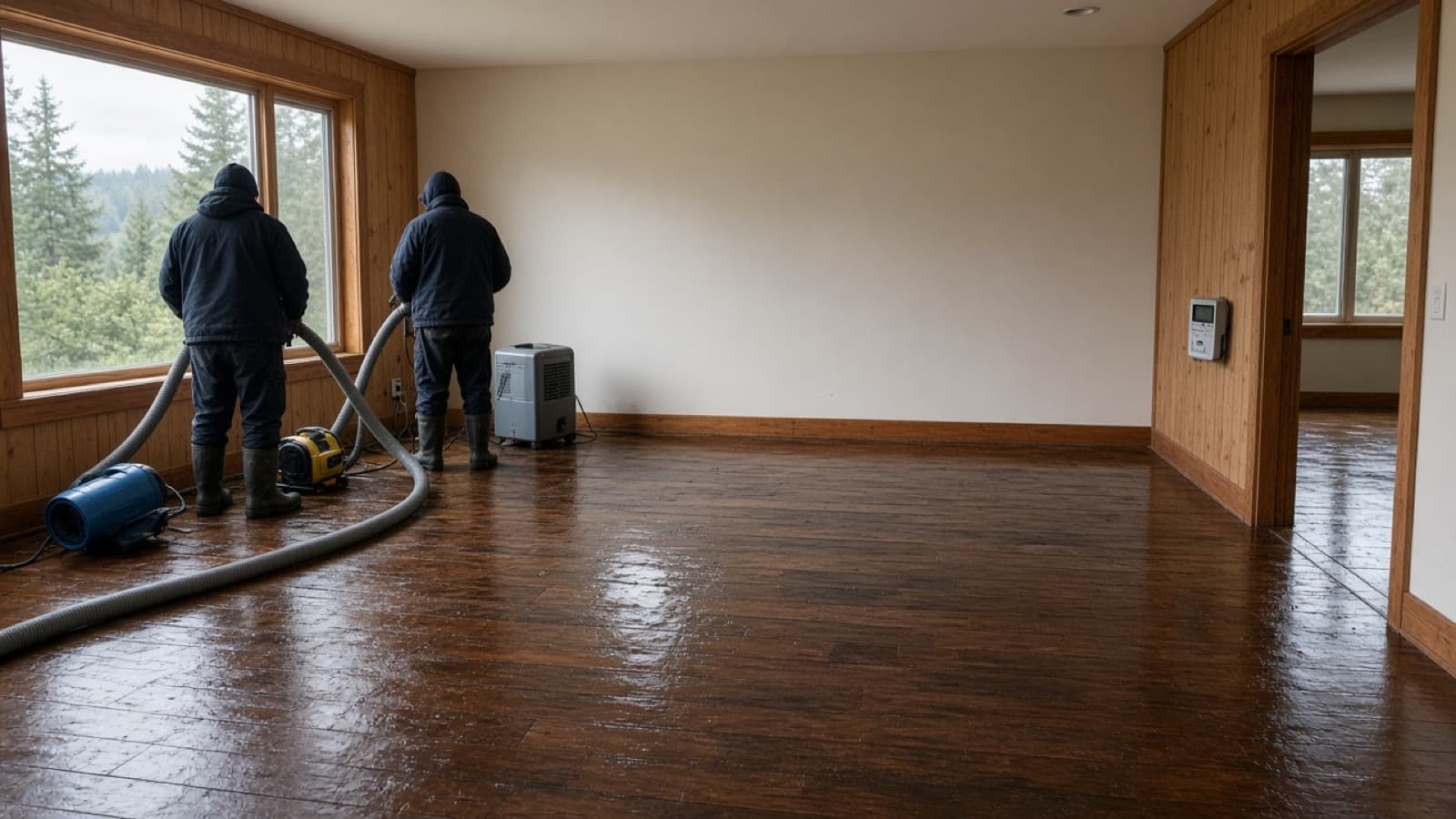
Ready to Restore Your Property?
Burnaby's Water Damage Restoration
Specialists Are Standing By
Whether you're dealing with a flooded basement, a burst pipe, storm damage, or the aftermath of a sewage backup — our Burnaby restoration company is here to help. Call now to get an assessment and same-day emergency response.
IICRC Certified · Licensed & Insured · Serving Burnaby, BC and all of Metro Vancouver