
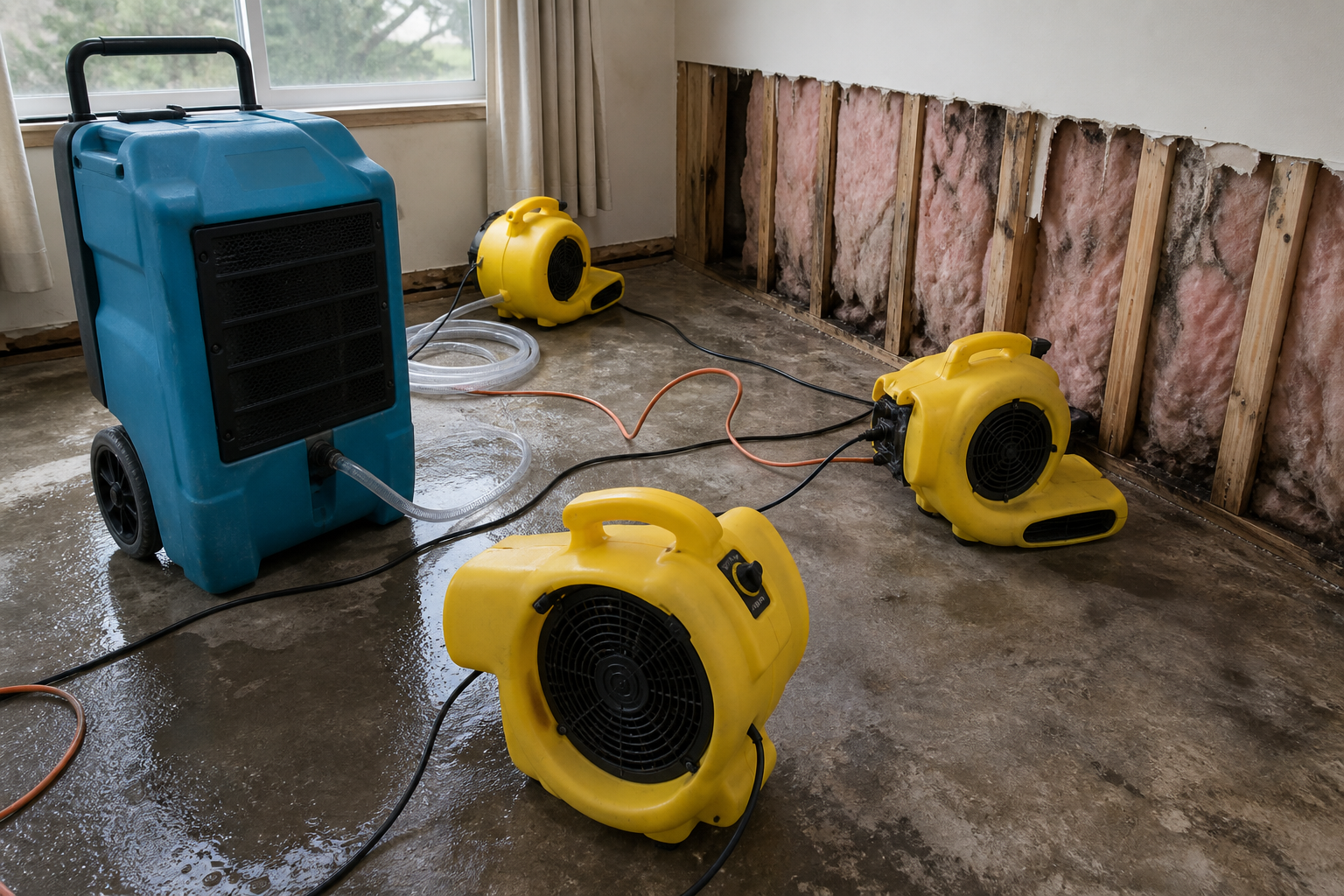
Structural Drying & Dehumidification in Coquitlam
Coquitlam uphill walls stay cool on Burke Mountain and Westwood, so plate pins and grain depression on that buried face set the dry.
Burke Mountain walls stay cool on the uphill side, and Westwood Plateau concrete does the same where the house is cut into the slope. Air in the middle of the rec room dries the room. The wet assembly is that buried wall and the bottom plate at its foot. We aim movers there, open the cavity enough for the stream to reach the framing, and run an LGR until the grains drop.
Maillardville basements are older and smaller, block or early concrete, and they still dry from the footing inward. Austin Heights and Ranch Park vary in age, with the same cool plate on a slab. Central Coquitlam rooms get pins on the plate and a pinless pass on the floor. The grain log has to show wood near a dry standard and concrete that has stopped falling, held overnight, before anyone talks about closing the wall. Daily readings set that date. Guessing from a dry-looking floor wastes a week.
Burke Mountain uphill walls followed on the grain log
Burke Mountain's uphill wall stays cool where the house cuts into the slope. The bottom plate at that wall is the slow wood. We open the cavity, aim air movers along it, and set an LGR so grain depression reaches that side of the room.
Pins in the plate and a pinless pass on the concrete go on the grain log every morning with the grains. Wood should close matching the closet plate we marked as a control in the house and hold overnight. The wall reading is the one that releases the machines.
Westwood Plateau cool concrete logged in the grain log
Westwood Plateau concrete on the buried side stays cool and wet after the window-well water is gone. Air movers belong on that wall, and the LGR belongs where it can keep a depression against the chill. Ranch Park rooms with the same slope get the same layout.
Daily grids and plate pins fill the grain log. Concrete should settle toward a drier patch of the pour and hold a day. Plates should sit near a dry standard from the house. If outlet grains creep back up toward the inlet, the unit is losing the wall and we reset it.
Maillardville older plates written on the daily grain log
Maillardville basements are older, block or concrete, and cool at the footing. The bottom plate is the slow wood. Air goes low along that plate, and an LGR runs until the grains show a real drop. Austin Heights houses of that age get the same aim.
The grain log takes a plate pin every morning and a pinless line on the slab. Wood closes within a few points of dry framing in that house, stable overnight. Slab squares have to stop falling as well. We leave the cavity open until both lines agree.
Ranch Park footing lines tracked in the grain log
Central Coquitlam footing lines stay damp at the base of older walls. Ranch Park adds slope and a cooler uphill face. We meter the plate and the concrete above the floor, and movers aim at that wet face. The LGR sits close enough to keep grains falling there.
Grain depression, plate moisture, and a short slab grid share the grain log each day. Targets are a dry plate from the house and a quieter patch of slab. Both hold overnight or the equipment stays. A weak depression sends us back to the LGR placement.
Questions about structural drying & dehumidification in Coquitlam
Why does a Burke Mountain uphill wall lag the room?
+
How do Maillardville bottom plates get a target?
+
What changes the grain log on Westwood Plateau concrete?
+
Other restoration work in Coquitlam
Structural Drying & Dehumidification in nearby cities
Get an Assessment
Tell us what happened in Coquitlamand we'll get back to you.
On this page
Structural Drying & Dehumidification written for Coquitlam houses, including Maillardville, Burke Mountain, Ranch Park.
All structural drying & dehumidification details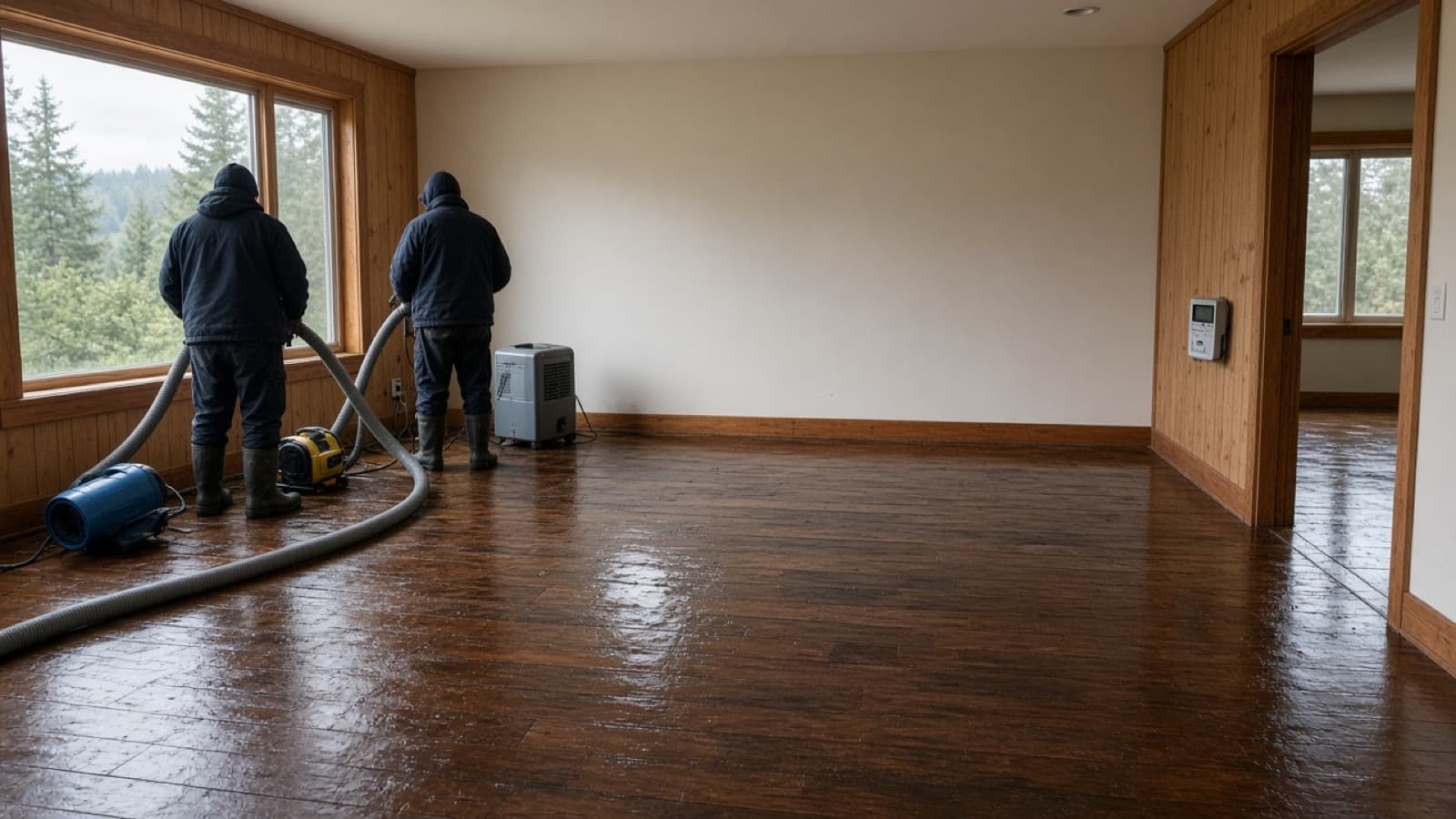
Ready to Restore Your Property?
Burnaby's Water Damage Restoration
Specialists Are Standing By
Whether you're dealing with a flooded basement, a burst pipe, storm damage, or the aftermath of a sewage backup — our Burnaby restoration company is here to help. Call now to get an assessment and same-day emergency response.
IICRC Certified · Licensed & Insured · Serving Burnaby, BC and all of Metro Vancouver