
Structural Drying & Dehumidification in New Westminster
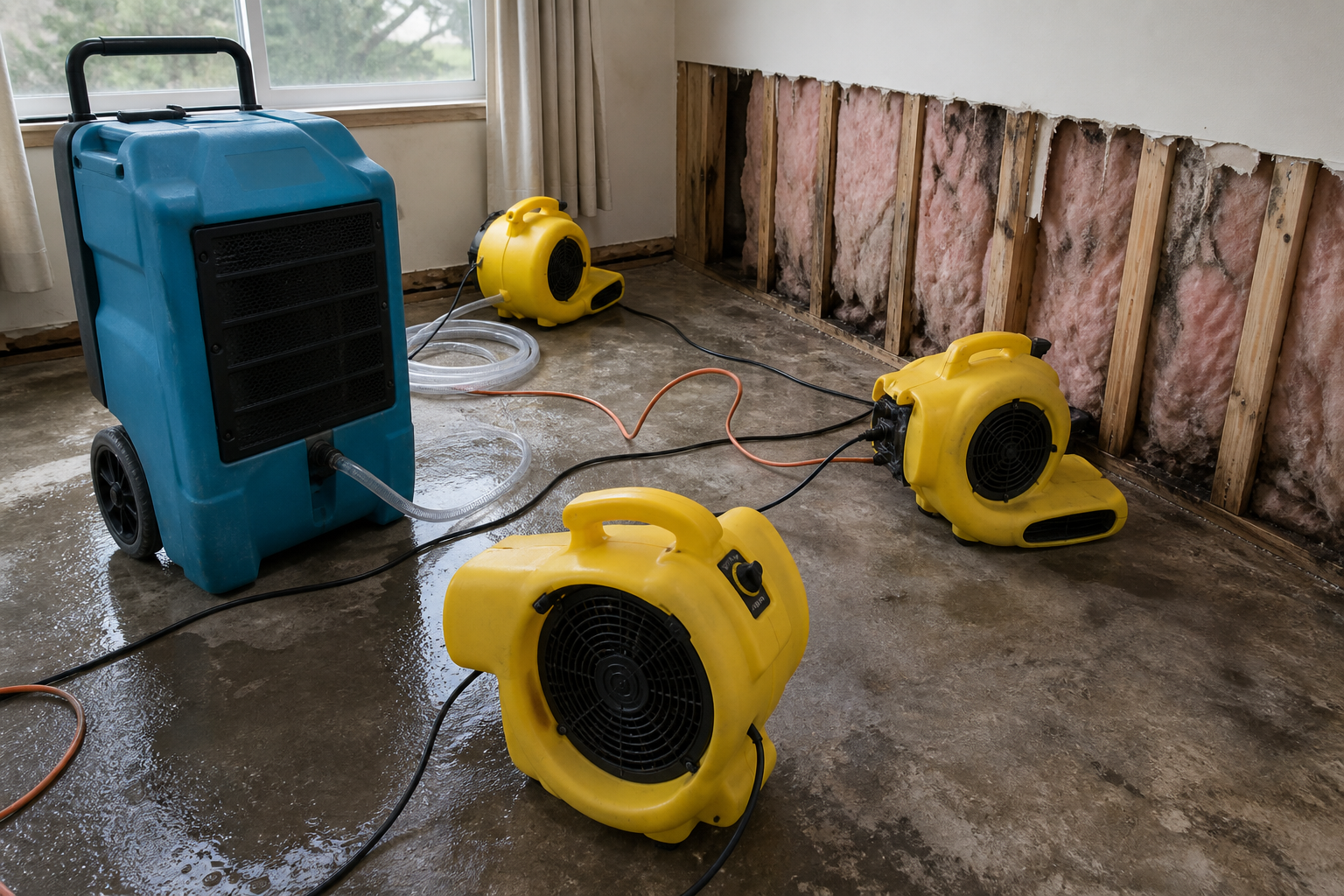
New Westminster lath holds water for days, and fir cups if heat runs without an LGR, daily pins, and a real grain depression on the log.
Queens Park lath holds water after the plaster face looks tired. Glenbrooke and Sapperton houses are the same build, plaster over wood lath and fir floors. That assembly needs more time than a drywall lid. Add heat and skip dehumidification, and the fir cups while the lath stays high. We'll run an LGR with the air movers, pin the lath itself, and let the grain log set the pace.
Uptown concrete and the newer towers by the river are a slab job, mats and air and a pinless grid. West End basements on the lower streets stay cool, and the bottom plate there is wood even when the upstairs is lath. Hill foundations in the old stock are early concrete and slow. We keep a separate line on the grain log for lath, for fir, and for slab, and we pull gear only when each one has held overnight near its dry standard.
Queens Park plaster lath followed on the grain log
Queens Park plaster hides wet lath. The face can look tired while the wood reading stays high. We open the soaked area, wash the cavity with air movers, and pin the lath strips. An LGR runs so the room can take the moisture the lath releases.
Those pin numbers and the grain depression land on the grain log every morning. The target is unaffected lath in the same house, a few points apart, held overnight. Heat with a flat grain number cups nearby fir and leaves the lath high, so both materials stay on the sheet until they agree.
Sapperton fir floors guarded in the daily grain log
Sapperton fir cups if the room is heated while the air stays wet. Glenbrooke floors built the same way follow that cup. The LGR runs with any heat, and air movers wash the boards. We pin the surface and a deeper spot so we can see the core.
The grain log holds both depths plus inlet and outlet grains. A wide grain depression lets the core catch the surface. The goal is a few points from dry fir in that house, stable overnight. If the surface crashes while the deep pin stays high, we ease the heat.
Glenbrooke bottom plates recorded on the grain log
Glenbrooke hill basements sit on early concrete that stays cold. The bottom plate at a stair or a well takes the longest. We aim air at that plate and along the wet wall while the LGR drops the room grains. The stream has to hit the wood.
Daily readings compare the wet plate with a dry one in the house. A few points apart, held overnight, is the wood target. A pinless check of the footing goes on the grain log beside the grains. Gear stays if the plate rebounds the next morning.
Uptown corridor concrete charted in the grain log
Uptown corridors dry as slabs. Stack water loads the deck while the hall air feels fine. Mats and movers cover the wet squares, and an LGR holds grain depression against all that concrete. West End lower floors share this grid. Daily air across the face matters.
The grain log is a pinless grid, same squares, plus grains in and out. The target is a drier area of that pour, gap stable overnight. Wet wood bases get pins aimed at a dry standard. Machines stay until the grid stops moving.
Questions about structural drying & dehumidification in New Westminster
Why does Queens Park lath hold water after the plaster looks tired?
+
How do you keep Sapperton fir from cupping while it dries?
+
What is the target on an Uptown corridor slab?
+
Other restoration work in New Westminster
Structural Drying & Dehumidification in nearby cities
Get an Assessment
Tell us what happened in New Westminsterand we'll get back to you.
On this page
Structural Drying & Dehumidification written for New Westminster houses, including Queens Park, Sapperton, Glenbrooke.
All structural drying & dehumidification details
Ready to Restore Your Property?
Burnaby's Water Damage Restoration
Specialists Are Standing By
Whether you're dealing with a flooded basement, a burst pipe, storm damage, or the aftermath of a sewage backup — our Burnaby restoration company is here to help. Call now to get an assessment and same-day emergency response.
IICRC Certified · Licensed & Insured · Serving Burnaby, BC and all of Metro Vancouver