
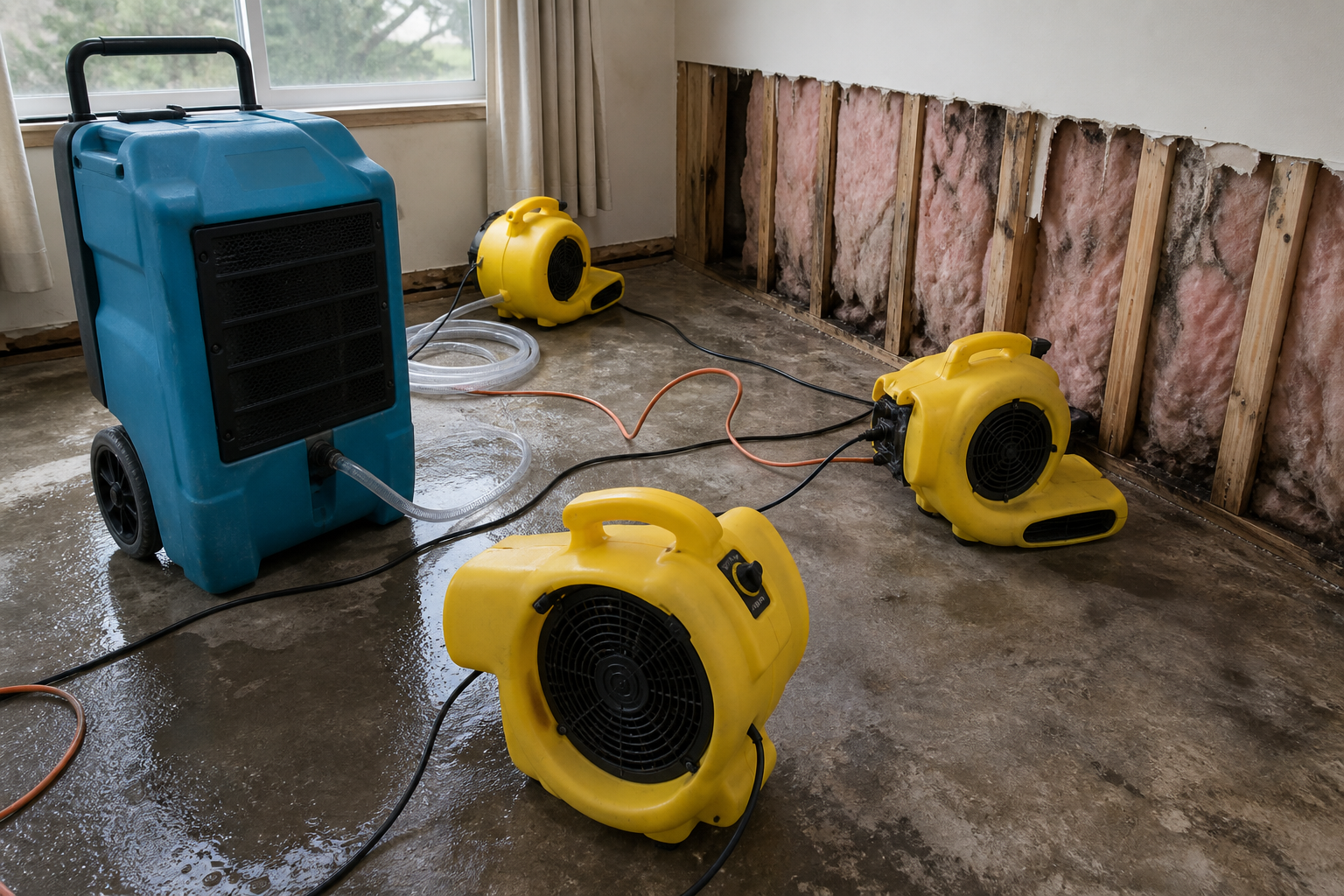
Structural Drying & Dehumidification in Pitt Meadows
Pitt Meadows slabs face a water table, so a reliable sump comes first and daily pins decide when the concrete is actually dry on the log.
Bonson slabs face groundwater the whole time the machines are running. Pitt Meadows sits on a floodplain, and a sump that short-cycles or quits puts water back as fast as the LGR takes it out. We'll prove the pump holds before we trust a grain depression number. Small houses downtown, through Central, and along Harris Road still need daily pins, because a short basement can hide a wet plate. The equipment is drying the slab, and the pump has to let it.
Meadow Gardens and the Pitt Polder edge keep crawls and plates close to that water table. Soil vapour reloads joists if the bays have no air and no cover once the wet material is removed. We'll aim movers into the cavity, grid the slab, and write grains every morning. Wood should meet a dry standard within a few points. Concrete should settle against a drier patch of the pour. Both have to hold overnight or the log stays open.
Bonson floodplain slabs tracked on the daily grain log
Bonson slabs face a water table that keeps feeding the concrete. We confirm the sump holds before we trust a grain depression number. Mats and air go on the slab, and daily pinless squares begin. A pump sending water back keeps reloading the slab. Squares start that same day.
The grain log notes the sump check beside the grains and the grid. Concrete should trend toward a drier patch and hold overnight. Plates get pins and a wood target a few points off dry stock. A rising edge after a solid depression day means the water is returning.
Harris Road sump checks written into the grain log
Harris Road houses dry against a water table that stays. Downtown homes do the same. Every visit checks the sump and writes it on the grain log. With the pump holding, mats and air dry the slab. Squares start that same day.
Grain depression counts once the floor stays down overnight. Plate pins and the pinless grid should move toward their targets and hold. Wood uses a dry standard. Concrete uses a drier patch. A night climb sends us to the pump before we add another machine.
Meadow Gardens joists recorded on the daily grain log
Meadow Gardens joists take vapour while the water table sits high. Movers in the bays and an LGR with grain depression can drop the wood. Open soil puts that moisture back. Wet debris comes out and a ground cover goes down on this visit.
The grain log shows joist moisture each morning beside the grains. The target is a few points from dry wood, stable overnight. Plates join the row. A rebound with solid outlet grains means the cover or the sump is still short, and that line stays active.
Central Pitt Meadows plates logged in the grain log
Central Pitt Meadows plates sit on damp slabs. The Pitt Polder edge keeps crawls in the same groundwater. We pin the plates and grid the slab after the sump proves it can hold. Air movers and an LGR follow that check. Grains get written the same day.
The grain log lines up the sump note, the plate pins, the squares, and the grains. Wood closes near a dry standard and holds overnight. Concrete closes on a drier patch and holds. A morning climb sends us back to the pump.
Questions about structural drying & dehumidification in Pitt Meadows
Why does the sump come before the LGR in Bonson?
+
How do you dry joists at Meadow Gardens?
+
What should Central Pitt Meadows plates read?
+
Other restoration work in Pitt Meadows
Structural Drying & Dehumidification in nearby cities
Get an Assessment
Tell us what happened in Pitt Meadowsand we'll get back to you.
On this page
Structural Drying & Dehumidification written for Pitt Meadows houses, including Downtown Pitt Meadows, Pitt Polder edge, Bonson.
All structural drying & dehumidification details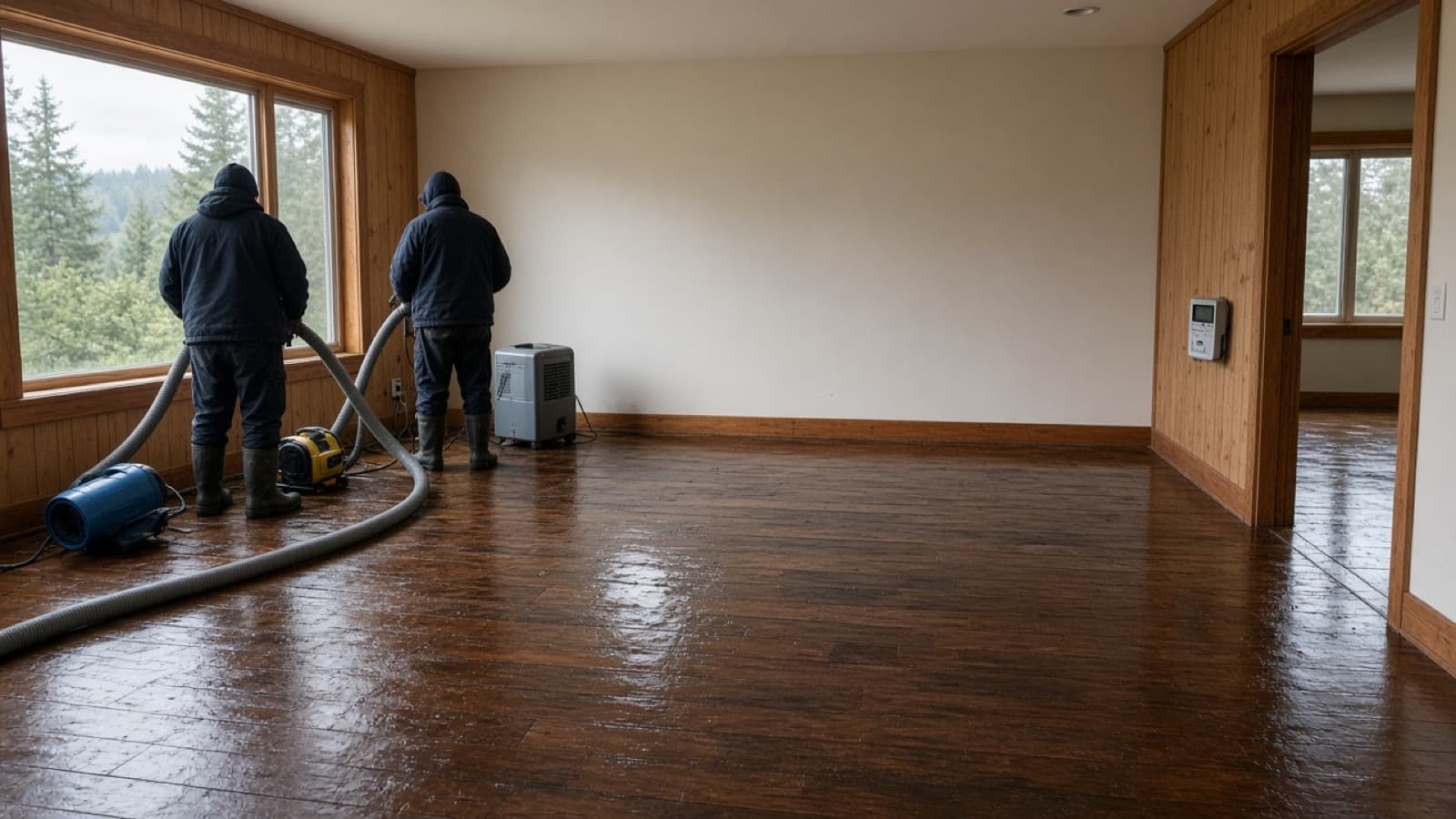
Ready to Restore Your Property?
Burnaby's Water Damage Restoration
Specialists Are Standing By
Whether you're dealing with a flooded basement, a burst pipe, storm damage, or the aftermath of a sewage backup — our Burnaby restoration company is here to help. Call now to get an assessment and same-day emergency response.
IICRC Certified · Licensed & Insured · Serving Burnaby, BC and all of Metro Vancouver