
Mold Remediation in North Vancouver
North Vancouver mold shows up in July after a daylight basement wall or a vented crawl stayed wet straight through a long wet winter.
January smells like nothing in a Lynn Valley house, and July smells wrong. The daylight basement's uphill wall took water all winter and never really dried, so mold gets obvious when the weather warms. Deep Cove, Edgemont, and Capilano houses with vented crawls do the partner version. Those crawls were built to breathe, and in this rain they stay damp. The joists take on moisture while the living room seems fine. The mountain streets take a lot of rain in November.
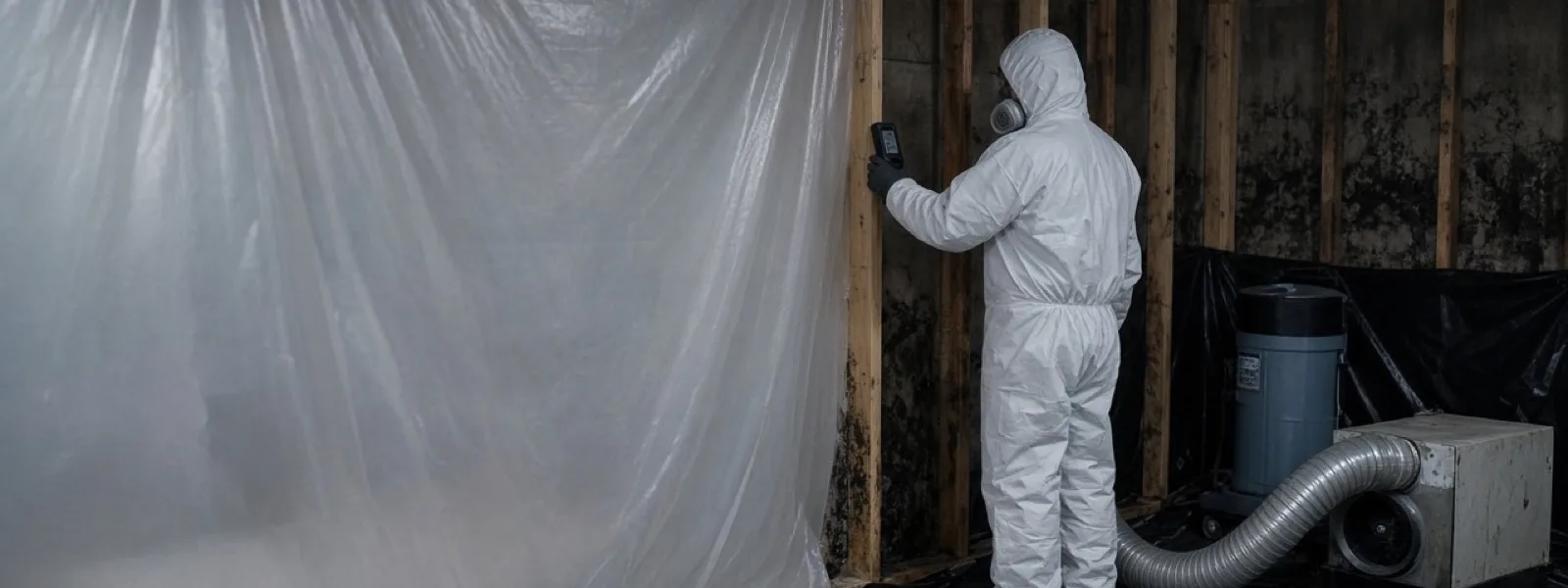
Norgate adds a lower, damper edge where the ground stays wet. Lower Lonsdale is a different building. A stack leak wets a suite cavity, and paint on the ceiling isn't a dry. Fogging the hall misses the uphill wall, the crawl, and the stack. Containment goes up, the ruined material leaves in bags, and we dry the cold concrete or the joists, and deal with the moisture path that would bring mold back.
Lynn Valley uphill walls stay the daylight basement return path
Lynn Valley daylight basements have a wet wall, and it's the one against the hill. Window wells and the soil behind the concrete keep that side cool and damp into spring. The room can smell fine in January. By July the batts on that wall are growing mold because the moisture never left.
We open the uphill section, contain the basement, and remove colonized insulation and board. The concrete takes longer to dry than the room. A fogger doesn't dry a retaining wall. If the well or the hill soil is still feeding that cavity, the return path is why new drywall fails.
Deep Cove vented crawls keep a summer smell return path
Deep Cove crawls under mid-century houses are vented, and those vents move damp air across cool joists. That isn't a dry. Soil below adds moisture. Capilano houses with the same floors smell fine at Christmas and wrong in July, because the crawl was wet the whole time.
A dehumidifier in the hallway doesn't dry joist bays. We contain the hatch, remove colonized insulation, clean wood that can stay, and put air in the cavity. If the soil and the vents keep loading the crawl, that return path is still feeding mold when we pack up.
Edgemont daylight basements hide the cold wall return path
Edgemont daylight basements hide the wet side behind finished board. The uphill wall stays cold, insulation sits on damp concrete, and mold grows out of sight. Norgate adds a damper slab edge, but the hill wall is the Edgemont path. Close that wall wet and you lock the moisture in.
We meter before we call it a small cut, then contain the room and remove colonized batts and board. The concrete has to dry. Fogging the rec room leaves the cold wall wet. If the hill is still feeding that cavity, the return path puts mold behind the new board.
Lower Lonsdale stack leaks reopen a suite cavity return path
Lower Lonsdale stacks fail between floors and wet the suite below. The ceiling gets paint while the cavity stays damp, and mold shows in a closet weeks later. This is a plumbing path inside concrete. It keeps feeding the bay until that stack is actually dry.
We contain the suite, open the wet ceiling or wall, remove colonized board, and dry the cavity. A fogger in the lounge won't reach a stack bay. If the line above is still leaking, the return path reopens and the smell comes back downstairs.
Questions about mold remediation in North Vancouver
Our Lynn Valley house only smells in July. Is that mold?
+
Can we keep the Edgemont drywall?
+
A Lower Lonsdale ceiling was painted after a stack leak. Why the smell?
+
Other restoration work in North Vancouver
Mold Remediation in nearby cities
Get an Assessment
Tell us what happened in North Vancouverand we'll get back to you.
On this page
Mold Remediation written for North Vancouver houses, including Lynn Valley, Deep Cove, Lower Lonsdale.
All mold remediation details
Ready to Restore Your Property?
Burnaby's Water Damage Restoration
Specialists Are Standing By
Whether you're dealing with a flooded basement, a burst pipe, storm damage, or the aftermath of a sewage backup — our Burnaby restoration company is here to help. Call now to get an assessment and same-day emergency response.
IICRC Certified · Licensed & Insured · Serving Burnaby, BC and all of Metro Vancouver