
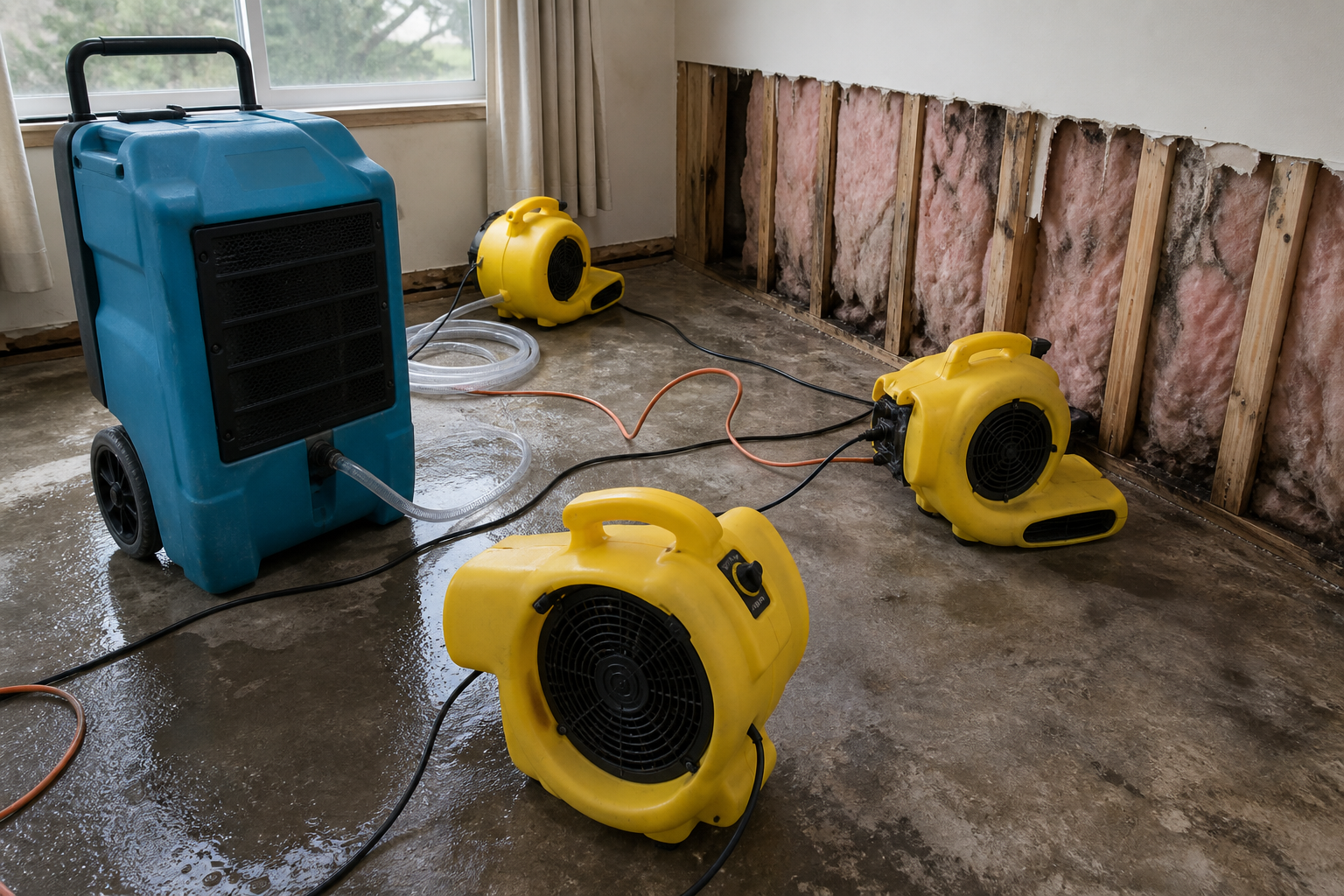
Structural Drying & Dehumidification in Delta
Delta's Ladner slabs dry slowly once the covering is off, while Tsawwassen top plates and sheathing dry on their own daily grain log.
Ladner concrete gives up moisture slowly, and the work starts once the floor covering is off the slab. We lay mats, move air over the face, and log a pinless grid every morning beside the grains. North Delta, Sunshine Hills, and Annieville are hill walls. The wet side gets opened, air movers hit the cavity, and the bottom plate is pinned until it nears a dry plate in that house. Daily numbers, same meter, same spots.
Tsawwassen and Boundary Bay are a wall story up high. Wind wets top plates and sheathing, so those members get pins and air in the cavity, which is a different map from a Ladner slab. The grain log keeps them apart. Grain depression has to be real on both jobs or the cold material stalls. Wood holds overnight near its dry standard. Slab squares hold overnight against a drier patch of the same pour. That is the release. We'll leave the machines until then.
Ladner slab grids recorded on the daily grain log
Ladner slabs give up water slowly once the covering is off. Mats go down, air moves over the face, and pinless squares get logged. The LGR has to produce grain depression in a low house. Groundwater at the edge keeps that concrete cool.
The grain log compares edge squares with the interior of the pour. They should converge and hold overnight. Door sills get pins and a dry-standard target. Mats stay down while any square is still sliding. Grains in and out sit on every row so we can see the depression holding.
North Delta hill walls tracked through the grain log
North Delta hill walls stay cool on the uphill side. The bottom plate there is the long pole on the job. We open the wet cavity, aim movers along it, and run an LGR for grain depression. Sunshine Hills basements repeat this layout.
Plate pins and a wall line go on the grain log each morning beside the grains. Wood should sit aligned with the far end of that same wall and hold overnight. Concrete should stop leading and hold a day. A flat grain number sends us back to the LGR layout.
Annieville bottom plates written into the grain log
Annieville plates sit against cool concrete and trail the studs above them. We pin the plate, aim air at the base, and hold grain depression on the LGR. That is what lets the wood fall. The street grid is shorter here, and the plate is still the slow member.
The grain log repeats those pins daily next to the grains. Target is dry framing a few points off, stable overnight. A pinless pass on the slab beside the plate joins the row. A plate that rises overnight is still being fed by the concrete, so the log stays open.
Boundary Bay top plates logged on the grain log
Boundary Bay wind wets top plates and sheathing. Tsawwassen walls take that same driven rain. We open the cavity, pin the plate and the sheathing, and aim movers there. An LGR keeps grain depression so those members can release. This map is the wall, high up.
The grain log lists those high pins on their own lines. Wood should close on a dry standard and hold overnight. Sheathing that lags the plate stays on the sheet. Inlet and outlet grains show whether the outlet air is actually drier. Same holes, every morning.
Questions about structural drying & dehumidification in Delta
Why does a Ladner slab dry slowly once the floor covering is off?
+
How do North Delta hill walls get their air?
+
What do you meter on a Tsawwassen top plate?
+
Other restoration work in Delta
Structural Drying & Dehumidification in nearby cities
Get an Assessment
Tell us what happened in Deltaand we'll get back to you.
On this page
Structural Drying & Dehumidification written for Delta houses, including Ladner, Tsawwassen, North Delta.
All structural drying & dehumidification details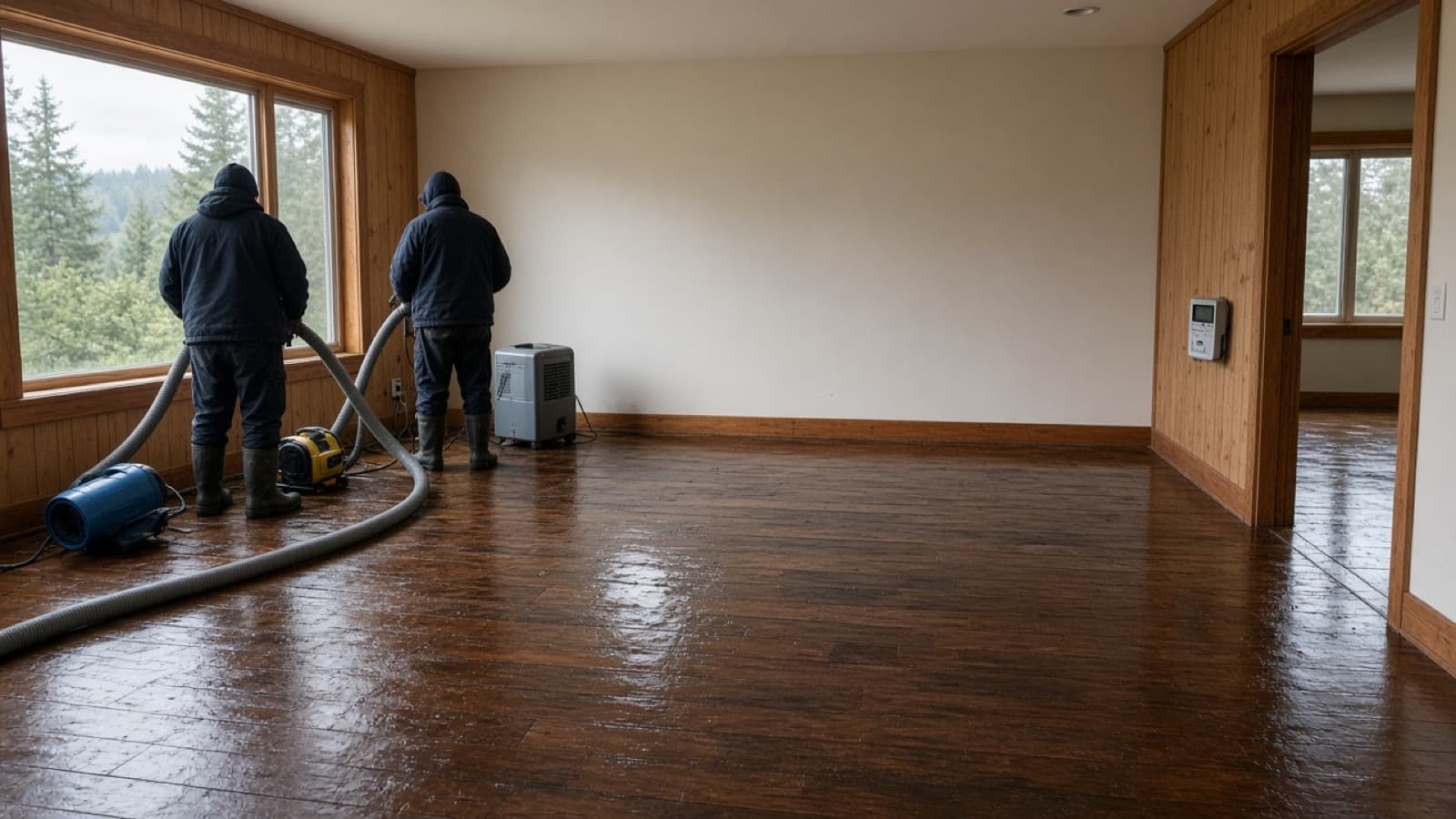
Ready to Restore Your Property?
Burnaby's Water Damage Restoration
Specialists Are Standing By
Whether you're dealing with a flooded basement, a burst pipe, storm damage, or the aftermath of a sewage backup — our Burnaby restoration company is here to help. Call now to get an assessment and same-day emergency response.
IICRC Certified · Licensed & Insured · Serving Burnaby, BC and all of Metro Vancouver