
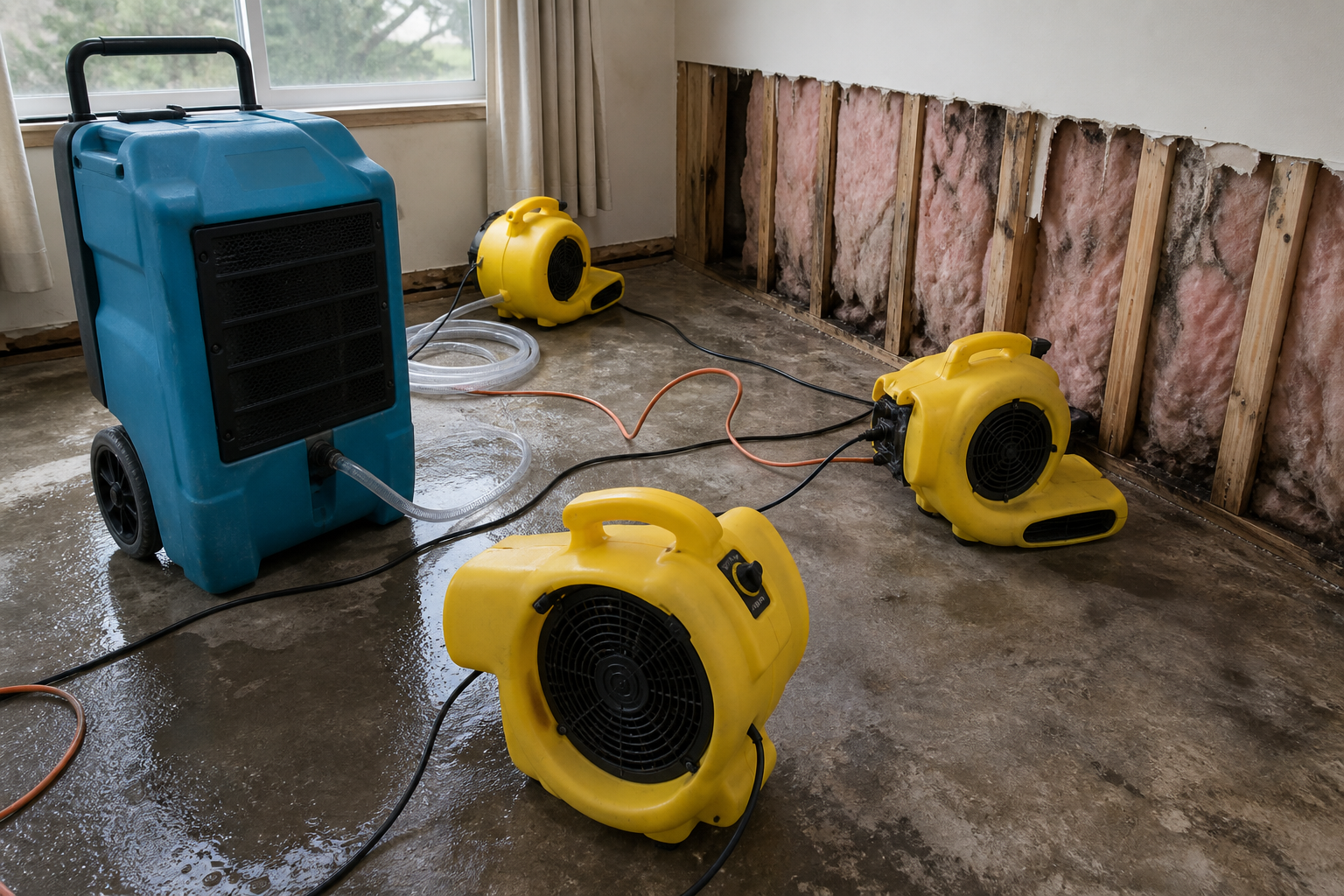
Structural Drying & Dehumidification in Maple Ridge
Maple Ridge crawl joists stay wet while the soil feeds them, so bay air, a ground cover, and daily pins decide when the wood is dry.
Websters Corners soil feeds vapour straight into a rural crawl. An open hatch lets the smell out and leaves the joists wet. The ground is the source, so air movers go in the bays and the LGR has to show grain depression or the wood reloads overnight. Once the wet debris is gone, a ground cover belongs down before anyone calls the crawl dry. Hammond's older crawls behave the same way.
Albion and Silver Valley bring deep basements, cool walls, and long footing lines. Those plates and slabs get daily pins and a pinless grid on the grain log. Town Centre houses are tighter to the street and still need the same readings if the lower floor got wet. Wood should land within a few points of a dry standard in that building. Concrete should stop falling against a drier patch and hold overnight. The hatch position is never the test.
Websters Corners soil vapour logged in the grain log
Websters Corners crawls take vapour off open soil. An open hatch clears the smell and leaves the joists wet. Movers in the bays and an LGR with real grain depression keep the wood from climbing back. A ground cover follows once debris is out.
The grain log watches those joists against a dry standard, a few points apart, stable overnight. Perimeter plates get pins. Rising wood with a strong depression means the soil is still feeding, so the cover has to be down. The hatch position never ends the job.
Albion deep basement plates tracked on the grain log
Albion basements run deep and cool, and the hillside plate is the slow wood. Silver Valley houses share that depth. We open the wet cavity, aim movers at the plate, and run an LGR until grain depression holds. Daily pins start immediately.
Pins and a pinless wall line hit the grain log every morning, with grains beside them. The plate should land within a few points of dry framing and hold overnight. Concrete should stop leading the grid and hold a day. Machines stay through that proof. We mark the pin holes and reuse them.
Silver Valley joist bays written in the grain log
Silver Valley joist bays stay cooler than the room you stand in. Town Centre crawls are shorter and still need that bay stream. Movers go into the cavity, and the LGR builds grain depression at that level. Upstairs flooring can feel normal while this wood is high.
Each bay on the grain log has a repeating pin. The target is a dry joist, a few points off, held overnight. End plates get included. A narrow depression means we change the laydown, and the wood stays on the log. Inlet grains and outlet grains sit in the same row.
Hammond crawl wood pinned onto the daily grain log
Hammond crawl wood sits over soil that keeps feeding the joists. Air in the bays comes first, with an LGR showing grain depression. A ground cover follows once the debris is out. The hatch is access, and the pins are the dryer.
The grain log carries joist pins and plate pins every day. Both should reach a dry standard within a few points and hold overnight. Numbers that fall in the afternoon and rise by morning mean vapour is still coming off the ground. We deal with that path and keep reading.
Questions about structural drying & dehumidification in Maple Ridge
Why is an open hatch a weak dryer at Websters Corners?
+
How do Albion basement plates get their target?
+
What keeps Hammond crawl joists climbing overnight?
+
Other restoration work in Maple Ridge
Structural Drying & Dehumidification in nearby cities
Get an Assessment
Tell us what happened in Maple Ridgeand we'll get back to you.
On this page
Structural Drying & Dehumidification written for Maple Ridge houses, including Albion, Silver Valley, Hammond.
All structural drying & dehumidification details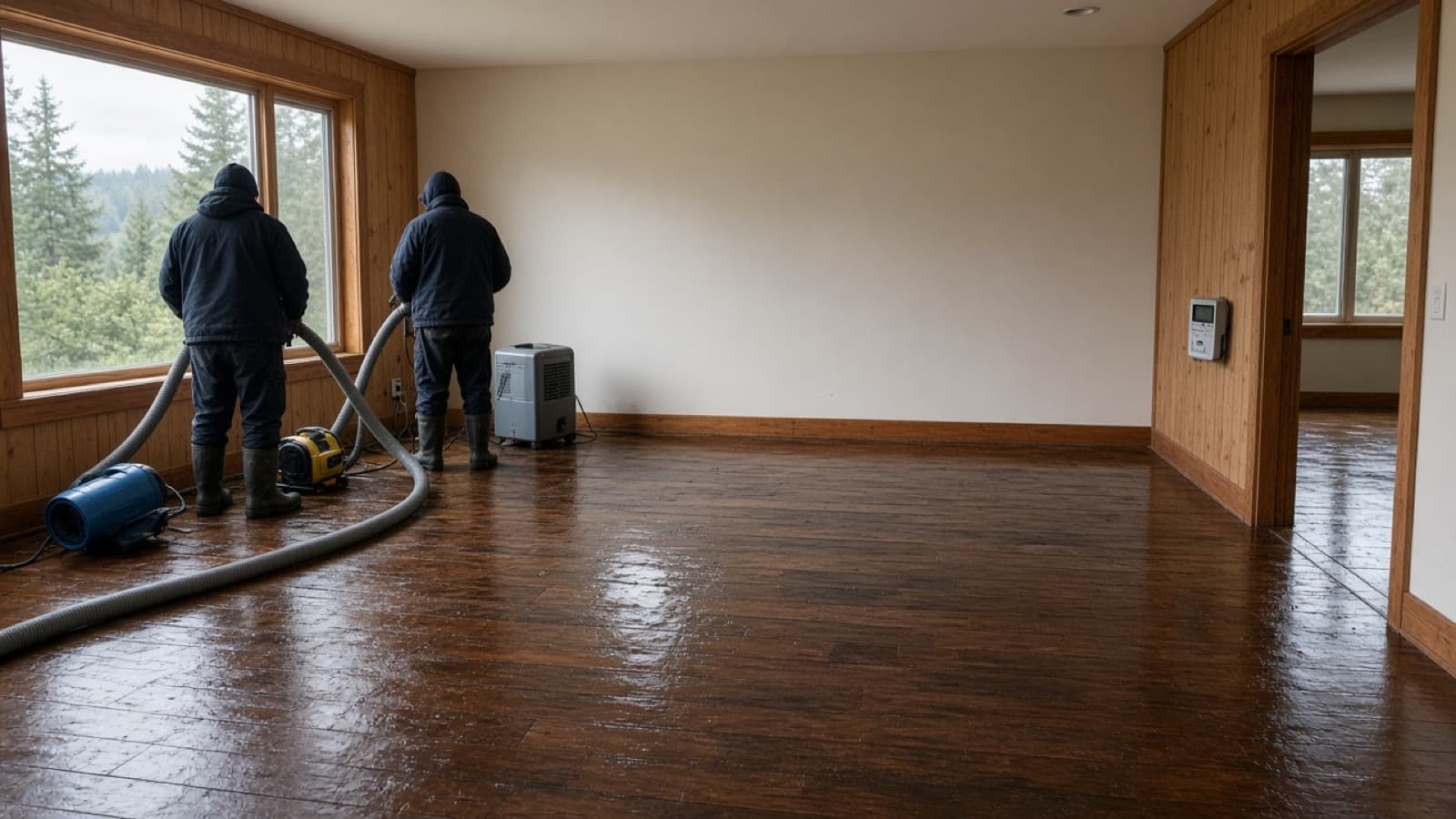
Ready to Restore Your Property?
Burnaby's Water Damage Restoration
Specialists Are Standing By
Whether you're dealing with a flooded basement, a burst pipe, storm damage, or the aftermath of a sewage backup — our Burnaby restoration company is here to help. Call now to get an assessment and same-day emergency response.
IICRC Certified · Licensed & Insured · Serving Burnaby, BC and all of Metro Vancouver