
Structural Drying & Dehumidification in Langley
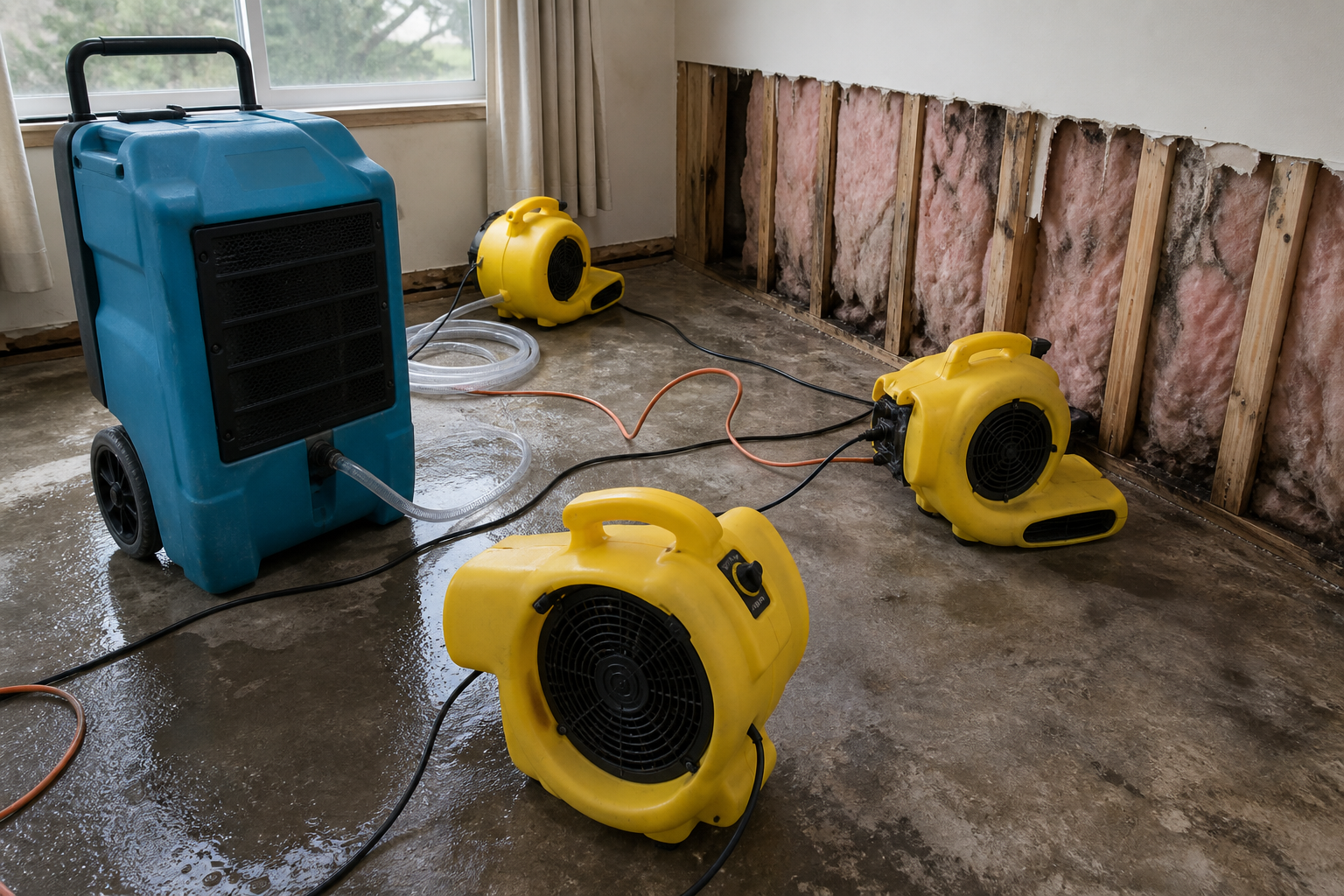
Langley's large cold basements need several air movers, an LGR with grain depression, and daily slab and wall readings before they can finish.
Willoughby rooms stay cold and they spread out, and Walnut Grove basements match that size. One dehumidifier handles a corner and leaves the rest of the slab alone. The drying plan puts several air movers on the concrete and on the insulated wall, plus an LGR big enough to drop grains across the volume. We write the air count and the grain depression every day. A single box in the doorway is a wish.
Brookswood and Murrayville crawls sit over soil and stay damp even when the house above feels fine. Joists get air in the bay, and the grain log gets a pin every morning. Fort Langley and Aldergrove basements are smaller and older, and the bottom plate on cool concrete is still the slow piece. Wood closes within a few points of a dry standard. Slab and wall readings hold overnight. Then the machines leave. The log closes the job.
Willoughby cold basements mapped on the daily grain log
Willoughby basements run large, and they stay chilly. One dehumidifier covers a corner and leaves the field alone. We set a counted row of air movers across the slab, then along the insulated perimeter. The LGR is sized for grain depression across that volume. Every machine has a spot on the map.
Pinless squares and plate pins repeat each morning beside grains in and out. Concrete should close toward a drier patch and hold overnight. Plates should near a dry standard from the house. A strong corner and a weak far wall mean the layout still has a hole.
Walnut Grove air counts kept in the grain log
Walnut Grove lower floors are large and they stay cold. We count air movers for the footprint and point them across the slab, then at the insulated perimeter. A single dehumidifier is a corner machine on a room this size. The LGR should show grain depression at more than one spot.
Counts, spot grains, and the pinless grid share the grain log each day. Plates get pins. Wood should hold overnight near a dry plate. Concrete should hold overnight near a drier patch of the pour. Then the mover count can come down.
Brookswood crawl joists pinned for the daily grain log
Brookswood crawls sit over soil, and the joists take vapour from that ground. Murrayville crawls match them. Bay air and an LGR with grain depression start the drop. A cover after the debris is out keeps the soil from undoing it. Pins start the first day.
Joist pins and plate pins hit the grain log every morning beside the grains. Both should land within a few points of dry wood and hold overnight. A morning rebound with a healthy depression points at the soil. We sort the cover and keep logging.
Murrayville soil crawls recorded on the grain log
Murrayville soil crawls keep feeding joists through a mild week. Aldergrove's older grids do it on a smaller footprint. Fort Langley basements add a cool plate on aged concrete. Air goes in the bays, wood gets pins, and the LGR has to show grain depression.
The grain log separates crawl joists, basement plates, and slab squares. Each has a target and has to hold overnight. Dry wood is the wood target, and a drier patch is the slab target. Grains in and out show whether the air is helping. A morning rebound keeps that line open.
Questions about structural drying & dehumidification in Langley
Why is one dehumidifier a weak plan in a Willoughby basement?
+
How do Brookswood crawl joists get marked dry?
+
What goes on the log in a Fort Langley basement?
+
Other restoration work in Langley
Structural Drying & Dehumidification in nearby cities
Get an Assessment
Tell us what happened in Langleyand we'll get back to you.
On this page
Structural Drying & Dehumidification written for Langley houses, including Willoughby, Brookswood, Fort Langley.
All structural drying & dehumidification details
Ready to Restore Your Property?
Burnaby's Water Damage Restoration
Specialists Are Standing By
Whether you're dealing with a flooded basement, a burst pipe, storm damage, or the aftermath of a sewage backup — our Burnaby restoration company is here to help. Call now to get an assessment and same-day emergency response.
IICRC Certified · Licensed & Insured · Serving Burnaby, BC and all of Metro Vancouver