
Mold Remediation in Langley
Langley mold shows up after a Willoughby sump failure gets closed in too fast, or from bare crawl soil under older Brookswood houses.
A dead sump in Willoughby wets a new basement, and the walls get closed before the plate dries. Walnut Grove houses on the same new grid do it after a power blip. Within a couple of weeks the bottom of the wall can grow mold behind board that still looks fresh. The low lot keeps seeing footing moisture, so the cavity never gets the dry week everyone assumed it had.
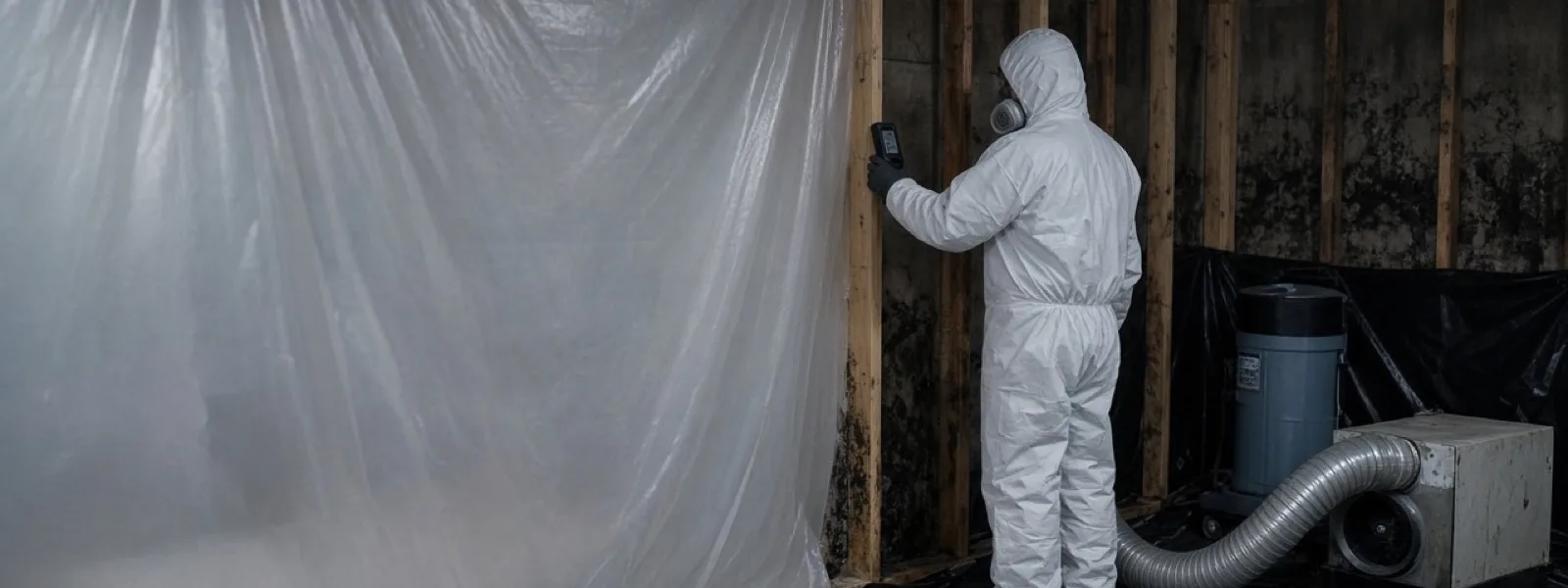
Brookswood and Murrayville are the older crawl story. Open soil under the house feeds the joists even in a dry-looking summer. Fort Langley and Aldergrove add village basements and, on the acreages, ditch water that sits at a foundation when the ditches overflow. Fogging misses every one of those paths. That's the whole job, start to finish. Poly and negative air stay up, the bad material is bagged, and we dry the assembly, and name the sump, the soil, or the ditch that would bring mold back.
Willoughby sump failure then closed walls leave a return path
Willoughby sumps die on a power blip, the basement floods, and the walls close as soon as the carpet is out. The plate stays damp in the new cavity. Mold starts before the paint looks dirty. The return path is that pump and the water under a low lot.
We open the closed wall, contain the basement, and remove colonized board and batts. The cavity is dried before new drywall is even a conversation. Fogging a large new basement doesn't dry a plate. If the sump fails again, the return path repeats.
Walnut Grove walls boarded wet keep the plate return path
Walnut Grove walls boarded the week after a sump flood keep the plate wet. Fresh drywall gets trusted because the house is new. Moisture sits in the batt, mold colonizes the paper, and the rec room smells while the upstairs looks fine. How new the house is doesn't matter.
That board comes off again. We contain the room, bag the colonized material, and dry the plate and the insulated wall. One small dehumidifier in a big basement is a gesture, not a dry. If the sump or the low-lot footing is still feeding the wall, the return path is built into the repair.
Brookswood crawl soil feeds joists on a quiet return path
Brookswood crawl soil feeds the joists even when summer looks dry. Open ground under older houses keeps the wood damp without a kitchen leak to blame. Fort Langley crawls pick up the same soil moisture. The smell is at the hatch. A fine living room doesn't clear the bay.
We hang poly at the hatch and bag the batts that have growth, and dry the joists with air in the crawl. Fogging the hallway never gets there. If the soil stays bare, the return path is the ground and mold shows up on the wood again.
Murrayville open soil under the house is the return path
Murrayville houses sit over soil that keeps the crawl damp, and acreage ditches add water when they overflow at a foundation. Aldergrove has the same mix of crawl dirt and ditch water. You can have no indoor leak and still grow mold on the joists or the sill.
Remediation without that conversation fails. We contain the crawl or the wet sill, remove colonized material, and dry the wood. Then we tell you if the ditch or the open soil is still the return path. A fog in the house doesn't lower ditch water.
Questions about mold remediation in Langley
How soon after a Willoughby flood can mold start?
+
Brookswood smells in August and we can't find a leak. Why?
+
Ditch water hit the Aldergrove foundation. Is that a mold path?
+
Other restoration work in Langley
Mold Remediation in nearby cities
Get an Assessment
Tell us what happened in Langleyand we'll get back to you.
On this page
Mold Remediation written for Langley houses, including Willoughby, Brookswood, Fort Langley.
All mold remediation details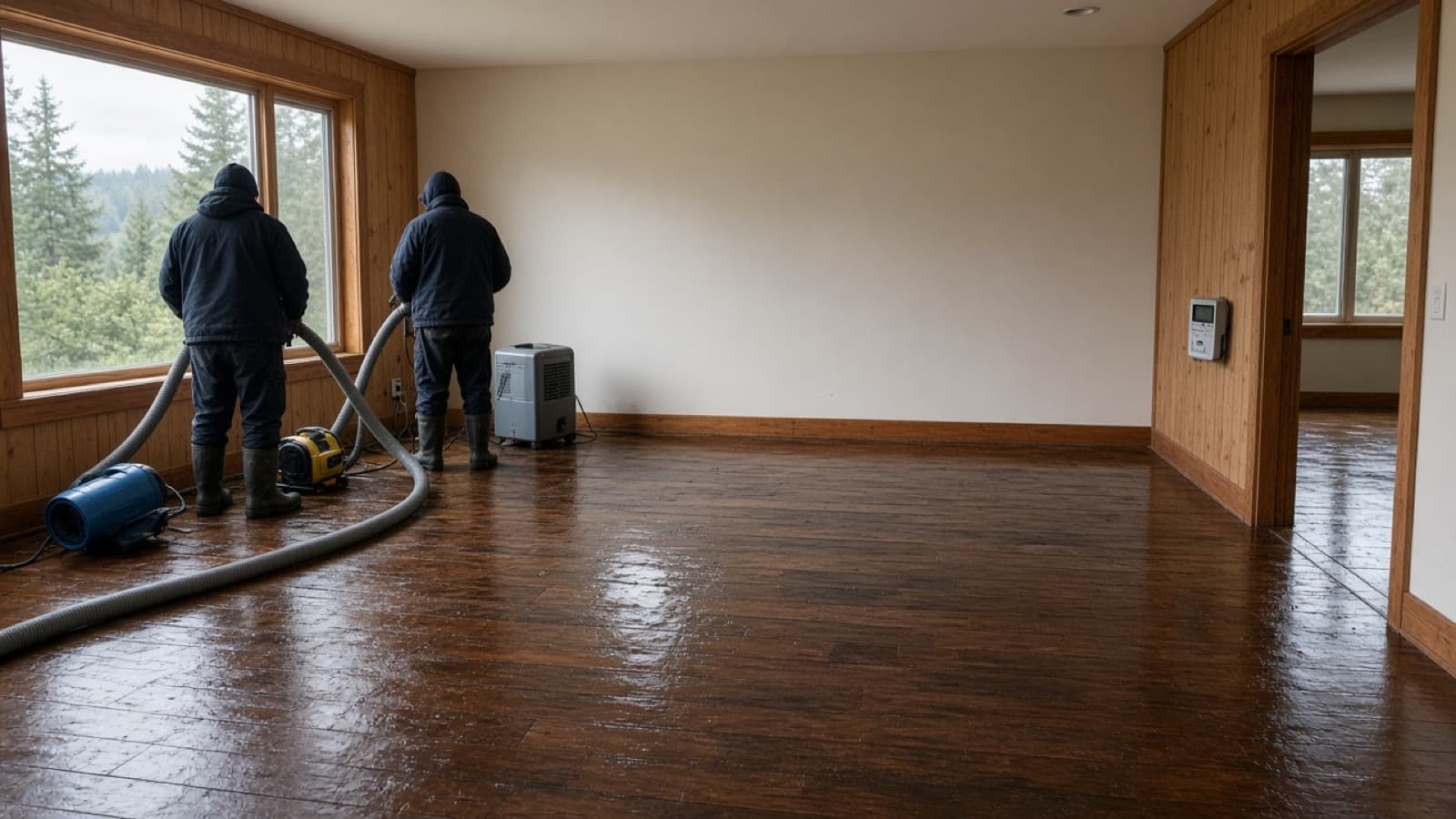
Ready to Restore Your Property?
Burnaby's Water Damage Restoration
Specialists Are Standing By
Whether you're dealing with a flooded basement, a burst pipe, storm damage, or the aftermath of a sewage backup — our Burnaby restoration company is here to help. Call now to get an assessment and same-day emergency response.
IICRC Certified · Licensed & Insured · Serving Burnaby, BC and all of Metro Vancouver