
Mold Removal in Langley
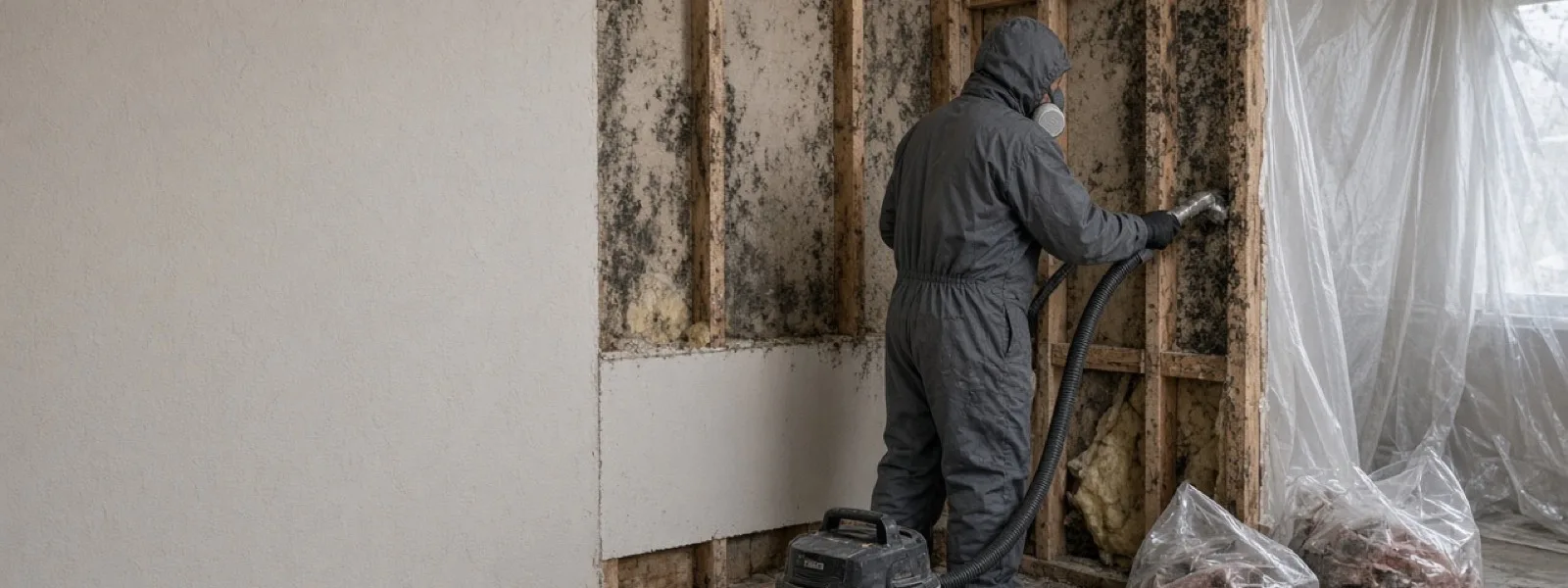
Crews cut colonized Willoughby and Walnut Grove bottom plates and bag Brookswood and Murrayville joist fill during mold removal in Langley.
Willoughby plates keep a colony when a basement was boarded over after the pump quit. Walnut Grove has the same plate line. We cut the lower wall, bag the board and the batts, and HEPA the studs. Brookswood and Murrayville are crawl joists. The fill sitting on that wood leaves through the hatch even in a warm month, because the soil under the house is still feeding the growth we are removing. Fort Langley and Aldergrove follow whichever of those two assemblies is actually colonized.
The plate line should be clean and dry before new board lands on it. Then we go straight back to the bags. Poly on the stair, negative air in the zone, and a HEPA vacuum before anyone calls the removal finished. Hatch bags are sealed in the bay. Plate-line bags are sealed at the cut and taken up the stair. Either load ends on the truck. A fog does not move colonized fill out of a Brookswood crawl.
Willoughby plate bag-out after the sump left a wet wall
Willoughby plates leave where the sump quit and the wall was closed over a colony. We set a cut line in clean board, bag the paper and the batts, and bag the plate lengths that crumble. Negative air holds the basement. Poly keeps the stair clean.
Hard plate gets a HEPA vacuum. What leaves the house is that lower band, sealed, the same day. The pump story explains how the mold got there. The removal is still the bags. Screwing new gypsum onto a dirty plate would finish the wall and keep the colony.
Walnut Grove cavity bag-out of board closed over mold
Walnut Grove cavities that were closed over mold lose that board and the batts behind it. We hang poly, run negative air, and cut to a line above the growth. Strips go into bags at the wall. Studs that stay are HEPA vacuumed.
The plate on a soft length leaves with the load. Clean wall above the line stays. Bags go up the stair sealed. This bag-out undoes the early close. A spray in the cavity and a new sheet would repeat the same mistake with fresher paint.
Brookswood joist bag-out of fill sitting on the wood
Brookswood joists lose the fill that is sitting on the colony, bagged in the bay and passed up the hatch. Poly rings the opening. Negative air pulls into the crawl. Hard wood gets a HEPA vacuum. Soft wood leaves in a second bag.
The soil under the house is why the growth keeps a foothold, and the takeout is still the material on the wood. We do not haul the ground. We haul the batts, the debris, and the failed lumber. Loose fill does not cross the kitchen.
Murrayville crawl bag-out with bags kept out of the kitchen
Murrayville bags stay out of the kitchen. We fill them in the crawl, seal them, and take them out the nearest door under a poly path. Negative air holds the hatch. Joists that stay get a HEPA pass before the plastic comes down.
Fort Langley and Aldergrove crawls use that same bag-out when the colony is on the joists. A plate-line house in those areas gets the wall cut instead. Either way the colonized material leaves in bags. A fog and a closed hatch is not a removal.
Questions about mold removal in Langley
What leaves a Willoughby or Walnut Grove wall?
+
Do Brookswood crawls get emptied to the soil?
+
How do you keep Murrayville bags out of the living space?
+
Other restoration work in Langley
Mold Removal in nearby cities
Get an Assessment
Tell us what happened in Langleyand we'll get back to you.
On this page
Mold Removal written for Langley houses, including Willoughby, Brookswood, Fort Langley.
All mold removal details
Ready to Restore Your Property?
Burnaby's Water Damage Restoration
Specialists Are Standing By
Whether you're dealing with a flooded basement, a burst pipe, storm damage, or the aftermath of a sewage backup — our Burnaby restoration company is here to help. Call now to get an assessment and same-day emergency response.
IICRC Certified · Licensed & Insured · Serving Burnaby, BC and all of Metro Vancouver