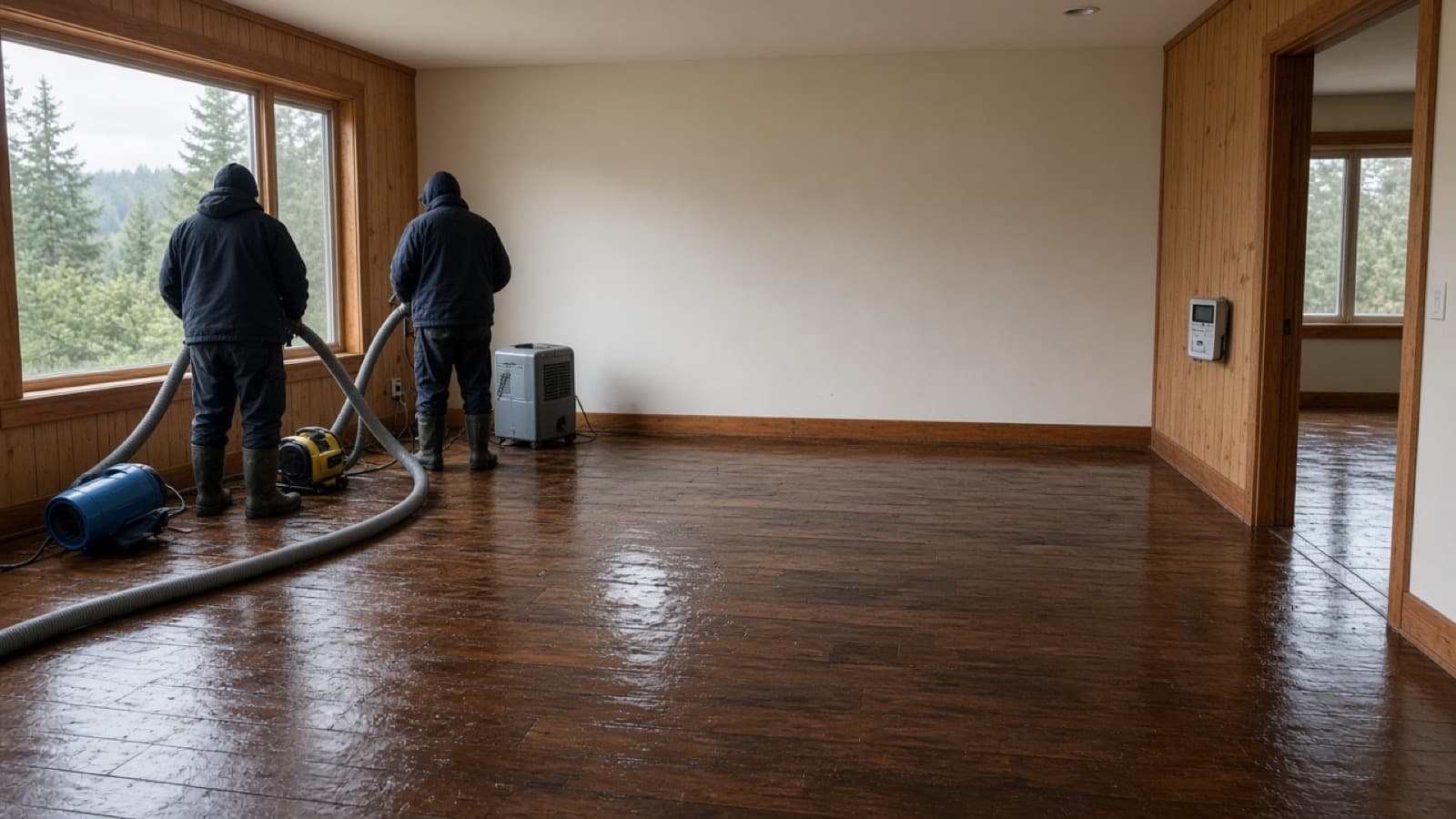
Carpet that looks damp, drywall that looks fine above the waterline, and a concrete floor that feels dry can all still be wet. Here's what usually stays and what has to go.
The Waterline on the Wall Is Not the Wet Line
Drywall wicks. So does the paper face on insulation, the back of a baseboard, and the MDF on a built-in shelf. If the water was two inches deep, the wet materials are often a foot or more up the wall. A moisture meter on the face of the paint will tell you. Your hand will not. We cut drywall to the next stud bay above the last wet reading, not to the stain. Cutting exactly at the stain leaves a wet cavity, and that cavity is where the smell starts.
Carpet Can Sometimes Stay. The Pad Almost Never Does.
A synthetic carpet that was extracted the same day, with clean water, can sometimes be dried and put back. The pad underneath is a sponge. Once it is saturated it holds water against the concrete, collapses, and does not come back. It comes out, gets bagged, and goes. If the water was from a floor drain, a toilet backup, or anything that sat long enough to go cloudy and sour, the carpet goes with the pad. You do not disinfect a urine-soaked or sewage-soaked carpet. You throw it out. Tack strips along the wall are wood and they stay wet. Those come up too.
Insulation in a Finished Basement Is a One-Way Decision
Fibreglass batts in the stud bays drink water and then hold it against the concrete or the vapour barrier. Wet fibreglass does not dry in place in a Burnaby basement. The air cannot get through it, and the R-value is gone anyway. If the bottom of the wall was wet, the batts in those bays come out up to the dry line. Leaving them 'to see if they dry' is how you open the same wall again in October and find grey fuzz on the concrete.
Laminate and Vinyl Plank Hide the Real Problem
Floating floors look almost fine while the underlayment and the concrete underneath are soaked. Laminate swells at the joints a day or two later. Luxury vinyl might not swell at all, which fools people into leaving it. If water got under a floating floor, the floor has to come up so the slab can actually dry. Trapped water under a vapour-tight plank is a mould farm with a lid on it. Tile is the exception more often than not. The tile can stay if the mortar bed meters dry. The baseboard and the drywall behind it usually cannot.
Concrete Feels Dry and Is Not
A slab that you can walk on in socks can still be well above a dry reading. Concrete releases water slowly. If you lay new carpet or lock new plank on it too soon, you seal that moisture in. Drying a basement slab means air movers aimed at the floor, a real dehumidifier, and daily meter readings, not a weekend with the windows cracked. In a cool Lower Mainland basement that often takes several days after the standing water is gone. The number we are chasing is a moisture reading back at the slab's normal level for that house, not 'it doesn't look wet.'
What You Can Leave, If the Water Was Clean and You Moved Fast
Solid wood furniture that was lifted the same day can usually be wiped and dried. Metal shelving, appliances that were not submerged, and painted concrete block above the wet line can stay. Cabinets made of particle board that sat in water are done. The board swells and the doors never sit right again. When we walk a basement we separate three piles: clean and dry, dirty but salvageable, and porous and contaminated. If you are staring at the room trying to decide, don't start ripping at random. A short assessment with a meter saves you from tearing out a wall that can dry, and from painting over one that cannot.
Dealing with water damage in Burnaby?
Our water damage restoration specialists are available 24/7.
Call (604) 200-3261